
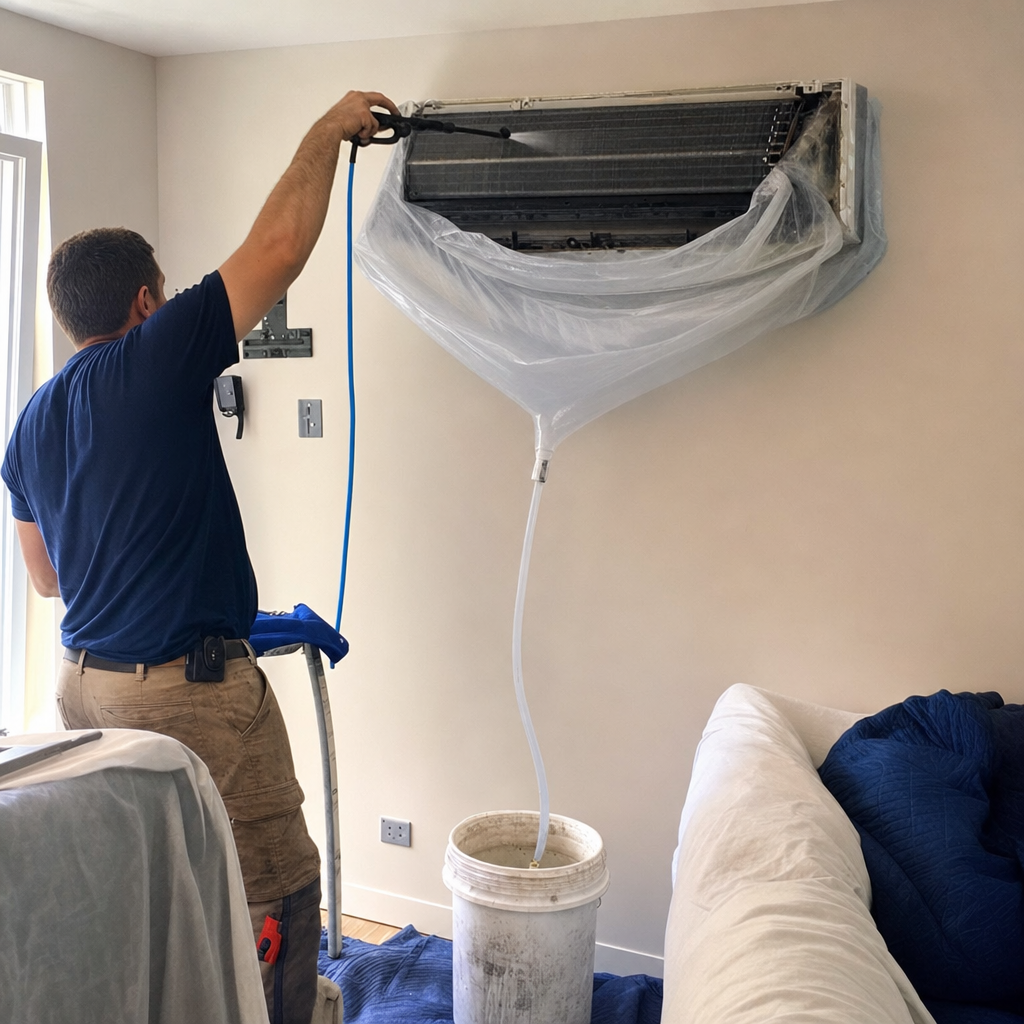
HVAC Duct Cleaning Service in Chicago, IL — What’s Really Inside Your Ductwork Matters
HVAC duct cleaning in Chicago is less of a routine maintenance task and more of a diagnostic event — especially in the city’s enormous inventory of pre-war bungalows, two-flats, and greystones where forced-air systems were retrofitted decades after the buildings were built. Anchor Air Duct Cleaning Service Greater Chicago brings professional-grade Rotobrush and Nikro equipment to every job, and Ronald Cooper, Owner & Lead Technician, personally leads every service call. If you’re ready to schedule or just want a straight answer on what you’re dealing with, call us at (833) 223-3823 — estimates are free, and we don’t send a salesperson; you get the technician.
Why Chicago’s Housing Stock Makes Duct Cleaning a First-Look Inspection
Chicago has roughly 80,000 Chicago-style bungalows — brick homes built between 1910 and 1940 that were originally heated by steam radiators. When natural gas forced-air systems arrived in the 1950s and ’60s, contractors shoehorned sheet-metal ductwork into basement crawlspaces, repurposed closets, and wall cavities that were never engineered to hold it. The result is duct runs that are often undersized, improperly sealed, and in many cases have not had a single professional cleaning since the day they were installed.
Ronald Cooper grew up in Bridgeport, a South Side neighborhood where winters arrive early and furnaces run hard, and he studied HVAC systems at Triton College in River Grove. That background — hands-on coursework in ventilation and air distribution combined with 11 years of fieldwork inside Chicago’s oldest housing stock — is what makes the difference between a technician who cleans what they can reach and one who actually understands what they’re finding.
In bungalow-belt neighborhoods like Portage Park, Bridgeport, and Beverly, we regularly open access panels and find original 1960s sheet-metal supply runs still wrapped in cloth-backed insulation from the radiator-conversion era. That material frequently tests positive for asbestos. When that happens, the job stops. Equipment gets packed up. We refer the homeowner to a licensed abatement contractor before any cleaning proceeds. That’s not a complication — that’s the inspection doing exactly what it’s supposed to do. A franchise crew running on a tight schedule may not flag it at all.
On the North and Northwest sides, older two-flats and three-flats present a different challenge: separate duct systems per unit, each short and difficult to access, lined with debris accumulated across multiple ownership changes and sometimes multiple fuel-source conversions — from coal to oil to gas, each era leaving its own residue behind. These are the buildings where the duct cleaning itself is almost secondary to understanding what the ductwork actually looks like before you start.
Chicago’s climate accelerates all of this. Sub-zero polar vortex winters and humid 90°F summers mean furnaces and central air units cycle nearly year-round — faster debris buildup than in most Midwest cities. In lakefront neighborhoods like Edgewater and Rogers Park, Lake Michigan’s shoreline effect keeps humidity persistently elevated, which raises the risk of mold colonization inside below-grade ductwork in older greystone buildings. That’s a sanitizing problem, not just a cleaning problem — and it’s exactly why having a single provider who does both matters.
What Professional Equipment Actually Reaches — and What Consumer Gear Misses
Most homeowners who’ve had a bad experience with Affordable HVAC Cleaning in Chicago, IL describe the same scenario: a crew showed up with what amounted to shop vacs and flex-hose brushes, spent 45 minutes in the basement, handed over a receipt, and left. The ducts looked no different. The air didn’t smell different. Nothing changed — because nothing substantial was removed.
The Rotobrush and Nikro systems we operate are industrial-grade extraction and agitation equipment, the same class of tools used in commercial and light-industrial settings. The Rotobrush system uses a rotating brush-and-vacuum combination that physically dislodges debris from duct walls while simultaneously extracting it — it doesn’t push contamination further down the line. The Nikro negative-air machines create a sustained vacuum draw through the entire duct system, so everything loosened by agitation gets captured, not redistributed.
In Chicago’s tight basement crawlspaces — some with clearances under 36 inches — equipment maneuverability is a real constraint. Professional systems with flexible, articulating access tools can navigate bends and transitions that a rigid shop-vac wand cannot reach. In a standard bungalow crawlspace, that difference accounts for a significant portion of the actual debris load.
“Clean ducts aren’t glamorous — but neither is replacing a blower motor because nobody checked what was clogging the airflow for a decade.”
That’s not a hypothetical. We’ve arrived at jobs where a general HVAC contractor replaced the blower motor the previous year without ever examining the duct runs that were choking the system. Specialization matters here. For 11 consecutive years, Best HVAC Cleaning in Chicago, IL has been the only thing Anchor does — not a side service, not an upsell tacked onto a furnace tune-up. Ronald Cooper can tell within a few minutes of inspection whether a duct system has a debris load that warrants full extraction, a targeted section clean, or a combined clean-and-seal approach, because this is the only work he does.
The Full-Ecosystem Service Model — One Visit, One Provider
The problem with single-service duct cleaners isn’t usually the cleaning itself — it’s what happens when the cleaning reveals something else. A technician finds a cracked duct run, a disconnected supply branch, or evidence of mold in a return-air section. They hand you a phone number for someone else and leave. Now you’re coordinating a second appointment, explaining the problem from scratch to a different company, and hoping the scope matches what the first technician described.
Anchor operates differently. From a single visit, we can deliver:
- Air duct cleaning — full extraction using Rotobrush and Nikro systems across supply and return lines
- HVAC unit cleaning — coil, blower, and cabinet cleaning to address the source of contamination, not just the symptom (see our HVAC Cleaning in Chicago page for full detail on what that involves)
- Duct repair and sealing — addressing disconnected joints, cracked runs, and improperly sealed transitions found during the cleaning
- Air quality sanitizing — using Abatement Technologies and Guardsman products to treat mold, bacteria, and odor-causing biofilm inside duct walls after extraction
- Dryer vent cleaning — a separate but related fire and efficiency risk, often handled in the same visit when a technician is already on-site
This full-scope model is especially useful in Chicago’s older multi-unit buildings, where a single visit to a three-flat might reveal three distinct conditions — one unit with a straightforward debris load, one with a cracked supply run behind the drywall, and one with moisture intrusion visible at the return plenum. A provider that only cleans leaves two-thirds of the problem unresolved.
For air quality sanitizing, we use products including Aprilaire and Abatement Technologies treatments — not aerosol sprays shot into a vent from the grille, but applied directly to duct surfaces after extraction, with appropriate dwell time. There’s a meaningful difference, and it shows up in whether the treatment actually adheres to the duct wall or just gets drawn into the blower and scattered.
If you’re on the home page trying to figure out where to start, the short answer is: start with a cleaning and inspection, then let what we find determine what comes next. That’s the honest sequence.
HVAC Duct Cleaning Service Pricing in Chicago
Pricing in Chicago’s duct cleaning market varies widely — partly because “duct cleaning” means different things to different companies, which is why understanding Furnace Duct Cleaning Cost in Chicago, IL matters before you book. Below are the ranges we operate within for standard residential service in Chicago. Every job starts with a free estimate, and the final scope reflects what we actually find, not a package we decided on before walking through the door.
| Service | Typical Range (Chicago Residential) |
|---|---|
| Standard air duct cleaning (single-family home) | $300 – $500 |
| Air duct cleaning (two-flat or three-flat, per unit) | $250 – $450 per unit |
| HVAC unit cleaning (coil, blower, cabinet) | $150 – $300 |
| Duct repair and sealing (per section) | $100 – $350 |
| Air quality sanitizing treatment | $75 – $200 |
| Dryer vent cleaning | $89 – $175 |
A few notes specific to the Chicago market: older bungalow crawlspaces and two-flat basements often require more access time than a standard suburban home with an open mechanical room — that’s a real labor factor that should be reflected in any honest estimate. If a company quotes you a flat rate over the phone for a Chicago two-flat without asking about crawlspace access or unit configuration, that’s worth questioning before you book. Call (833) 223-3823 for a free, specific estimate based on your actual home.
Frequently Asked Questions About HVAC Duct Cleaning Service in Chicago
HVAC duct cleaning for a standard Chicago single-family home typically runs between $300 and $500, depending on duct system size, accessibility, and debris load. Older bungalows and two-flats on the North and Northwest sides often take longer to access and may run toward the higher end of that range. If sanitizing or duct sealing is needed after the clean, that adds to the total — but we’ll tell you exactly what we find before adding anything to the scope. Call (833) 223-3823 for a free estimate.
If your home was built before 1970 and has never had a professional duct cleaning, it almost certainly needs one — regardless of how the air registers look from the surface. In Chicago’s pre-war housing stock, duct runs inside basement crawlspaces and wall cavities accumulate debris that’s invisible from the grille but significant in volume. Other indicators include inconsistent airflow room to room, dusty surfaces that reappear shortly after cleaning, a musty smell when the furnace or AC kicks on, or a system that runs longer than expected to hit temperature. Any of these warrants an inspection.
Yes — professional-grade equipment like the Rotobrush and Nikro systems we use is specifically designed for access through existing register openings and standard duct access panels, without cutting into walls or ceilings. The exception is when a cleaning reveals a disconnected joint or damaged section that requires repair, which may involve limited access work. We identify those situations during the inspection phase and discuss them before any additional work proceeds. The cleaning itself is non-destructive to the ductwork or the surrounding structure.
In most cases, yes — especially in Chicago homes where the HVAC unit has been running the same contaminated duct system for years. Cleaning the ducts without addressing the blower wheel and evaporator coil is like washing a car with a dirty sponge: the source of contamination is still present and will re-coat the ducts within a heating season. Our HVAC Cleaning service is designed to be done in the same visit as duct cleaning, which is more efficient for both scheduling and cost. When both are done together, the results last measurably longer.
Schedule Your HVAC Duct Cleaning Service in Chicago
If you’re in Portage Park, Beverly, Bridgeport, Rogers Park, or anywhere across Chicago and you’ve been putting off a duct cleaning because you weren’t sure who to trust with older ductwork — this is the call to make. Ronald Cooper leads every job personally, using professional-grade equipment, and 502 verified customers with a 4.9-star average have already made the case better than we can. Call (833) 223-3823 for a free estimate. No obligation, no pressure — just a straight answer from the technician who’ll actually do the work.
Written by Ronald Cooper, Owner & Lead Technician at Anchor Air Duct Cleaning Service Greater Chicago, serving Chicago, IL.
What Our Customers Say
"Two guys, about three hours, plastic down at every register, and they wiped the vent covers before putting them back."
— Jasmine Robinson"Told me straight that our ducts were in decent shape and didn't need doing every year like the mailer companies claim."
— Gabriela Reyes"My wife's allergies had been bad in this house since we moved in. It's been two months since they did the ducts and it's noticeably better. Not a miracle, but real."
— Brian Barrett