
Is Air Duct Cleaning Worth It in Chicago? Here’s the Honest Answer — and It Depends on Your House
Whether Whole House Air Duct Cleaning Cost in Chicago, IL is worth it depends on whether the system has never been professionally cleaned, whether the housing stock is pre-1980s with retrofitted forced-air ductwork, or whether there’s been a triggering event like a renovation, rodent intrusion, or visible mold near a register. For a 2019 condo with annual HVAC maintenance and no pets — the math looks different. The answer almost always lives inside the condition of the ducts, not in a general opinion about the service. If you want a straight assessment before committing to anything, call (833) 223-3823 — estimates are free.
Why Chicago’s Housing Stock Changes the Worth-It Calculation
Most of the national skepticism about air duct cleaning — including the frequently cited EPA and NADCA studies suggesting cleaning doesn’t consistently improve air quality — is based on research conducted on modern, purpose-built duct systems in homes where forced air was part of the original design. That’s a reasonable population to study. It’s just not the population of homes that fills most of Chicago’s residential neighborhoods.
Chicago has roughly 80,000 Chicago-style bungalows — brick single-family homes built between 1910 and 1940 — and the vast majority were originally heated by steam radiators. When forced-air systems were retrofitted into those homes starting in the 1950s and 1960s, sheet-metal duct runs were crammed into basement crawl spaces, repurposed closets, and utility chases that were never designed to hold them. The ductwork is often undersized, poorly sealed at the joints, and in many cases, hasn’t been opened professionally since the day it was installed.
That distinction matters enormously for the worth-it question. The skeptics aren’t wrong — they’re just describing a different house than the one you’re probably standing in if you live in Portage Park, Bridgeport, Beverly, or dozens of other bungalow-belt neighborhoods across the Northwest and South sides. Ronald Cooper, Owner and Lead Technician at Anchor Air Duct Cleaning Service Greater Chicago, grew up in Bridgeport, and the first thing he’ll tell you is that a first-time deep clean on a 1960s duct run isn’t a routine maintenance task — it’s closer to opening a sealed room and finding out what’s been accumulating in there for decades.
On those jobs, Ronald typically finds a combination of compacted fibrous debris, degraded cloth-backed duct insulation that has broken down and shed material into the airflow, and in some cases original sheet-metal supply lines wrapped in insulation that tests positive for asbestos — a material used during the radiator-to-forced-air conversion era that requires a full stop-work and an abatement referral before any cleaning equipment goes anywhere near it. That’s not a sales pitch. That’s what’s actually inside those systems. The before condition is the answer to the worth-it question.
Two-flats and three-flats on the North and Northwest sides present a related problem: separate, short duct runs per unit that were configured during an oil or coal heat conversion, accessible only from awkward angles, and lined with debris that’s been layered in since the building last changed hands — sometimes decades ago.
Chicago’s Climate Is an Accelerant — Not a Footnote
Temperate-climate benchmarks for duct cleaning intervals — the 3-to-5-year figures you’ll see cited in general guides — are built around systems that cycle seasonally, not year-round. Chicago’s HVAC systems don’t get that courtesy.
Polar vortex winters push furnaces to run near-continuously from October through April. By June, those same systems are pulling humid 90°F air through return registers and running the AC for months. The duct system cycles through heating, cooling, and the transition seasons in a way that accumulates debris and moisture faster than the temperate-city benchmarks assume.
The moisture piece is especially relevant in lakefront neighborhoods like Edgewater, Rogers Park, and South Shore, where Lake Michigan’s shoreline effect drives persistently elevated humidity — particularly in the below-grade units of older greystone buildings. When humid air cycles through a duct system that has accumulated organic debris, the conditions for mold colonization are in place. That’s not a hypothetical. Abatement Technologies antimicrobial treatment applied after a professional cleaning addresses the residual biology that extraction alone doesn’t eliminate, and it’s part of why a full-service cleaning is categorically different from a quick-pass shop vac job.
The honest answer to How Often to Clean Air Ducts? (Chicago, IL) for a well-maintained system is closer to every 3 years under normal occupancy conditions — and considerably shorter if there are pets, allergy sufferers, recent renovation work, or a duct system that has never been professionally cleaned and is operating in the bungalow-belt housing stock described above.
When Air Duct Cleaning Is NOT Worth It
This section exists because a page that only makes the case for cleaning isn’t giving you real guidance — it’s giving you a sales pitch. So here’s when we’d tell you to hold off.
- New construction, post-2015: Purpose-built duct systems in homes less than 10 years old with no renovation activity, no pets, and regular filter changes typically don’t accumulate enough debris to justify professional cleaning. Keep up the filter schedule and revisit in a few years.
- Recently cleaned systems without triggering events: If a qualified technician cleaned your ducts within the last 2–3 years, nothing unusual has happened since, and your filter checks out, you’re probably fine. Cleaning on a fixed calendar rather than a condition-based one wastes money.
- Systems with known asbestos-containing insulation that hasn’t been abated: If your home is pre-1980 and you haven’t had the duct insulation tested, a professional cleaning should not proceed until that assessment happens. We stop work and refer to an abatement contractor when we encounter this — and it comes up more often in Chicago’s bungalow neighborhoods than most people expect. This is non-negotiable from a safety standpoint.
- After a low-bid “whole house for $99” franchise job done last year: If you paid a very low price for a very fast job recently, the answer isn’t to pay again immediately — it’s to understand what was and wasn’t done, and whether the equipment used was capable of meaningful extraction in the first place.
The Equipment Gap: Why the Worth-It Debate Conflates Two Different Services
A significant share of the “duct cleaning doesn’t work” skepticism online is traceable to a specific kind of cleaning — consumer-grade or franchise-speed jobs using equipment that can’t generate the negative pressure needed to dislodge and extract compacted debris from older ductwork. When that’s the cleaning someone experienced, the skepticism is earned. It genuinely didn’t work, because the tools weren’t up to the job.
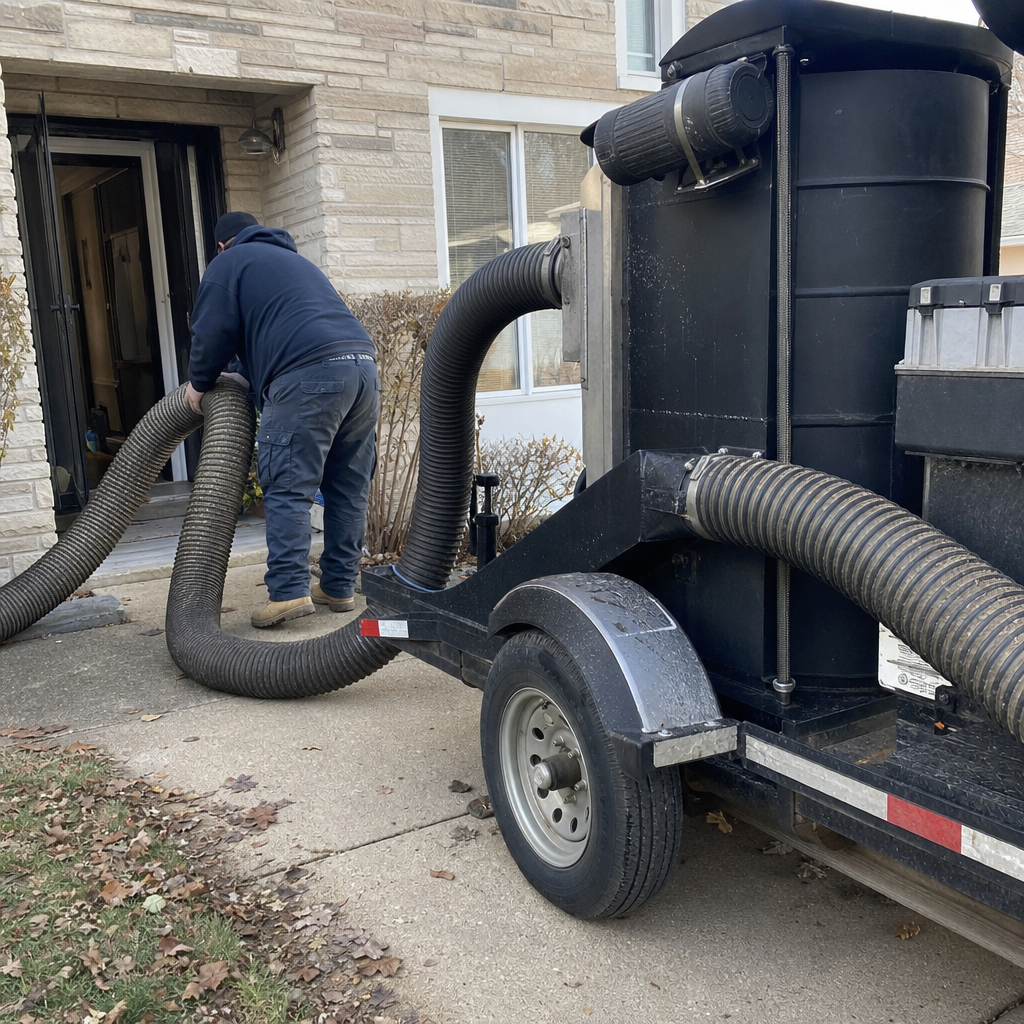
Professional-grade extraction is a different category. The Rotobrush agitation and Nikro negative-pressure extraction systems we operate are the same industrial-level equipment used in commercial and institutional duct cleaning — not consumer shop vacs run through a residential duct. The difference in what comes out of the system, and what stays out, is measurable in the debris recovered and in the before-and-after airflow at the registers.
If you’ve had a low-bid cleaning that didn’t seem to make a difference, that experience is real — but it’s evidence about a specific class of service, not about duct cleaning done with the right equipment. Anchor’s Air Duct Cleaning in Chicago uses the same professional-grade industrial tools on a residential bungalow as on a commercial property, because the ductwork doesn’t care about the business model of the person cleaning it.
Clean ducts aren’t glamorous — but neither is replacing a blower motor because nobody checked what was clogging the airflow for a decade.
For full details on our process and what to expect on the day of service, the Air Duct Cleaning page covers it step by step.
Key Takeaways: Is Air Duct Cleaning Worth It in Chicago?
- For pre-1980 Chicago homes with retrofitted forced-air ductwork and no prior professional cleaning — yes, almost certainly worth it, and the condition of what’s inside typically confirms it.
- Chicago’s year-round HVAC cycling and lakefront humidity accelerate debris and moisture buildup faster than national averages suggest.
- The national skepticism about cleaning benefits is largely based on modern, purpose-built systems — not 1960s bungalow retrofits that have never been opened.
- New construction, recently cleaned systems, and low-activity households without triggering events are the legitimate cases where cleaning can wait.
- The worth-it outcome depends heavily on whether the equipment used is capable of real extraction — industrial systems produce results that consumer-grade tools don’t.
- Pre-1980 duct insulation in Chicago bungalow neighborhoods has a meaningful probability of containing asbestos — always get that assessed before any cleaning begins.
- With 502 verified reviews at a 4.9-star average and 11 years focused exclusively on air duct and HVAC cleaning, Anchor’s track record reflects what happens when a specialist runs the equipment on every job.
- You can explore the full range of what we offer — from cleaning and sanitizing to duct repair and sealing — on our home page.
Frequently Asked Questions
The clearest indicators are visible debris or dark discoloration around your supply registers, noticeably reduced airflow compared to when the system was new, musty or dusty odors when the furnace or AC kicks on, or a first-time cleaning scenario in a pre-1980 home. In Chicago specifically, any home in the bungalow belt that has never had a professional cleaning should be treated as overdue — the housing stock and duct retrofit history make that the default condition rather than the exception. If you’re unsure, a visual inspection costs nothing; call (833) 223-3823 and we’ll tell you what we see.
Professional air duct cleaning in Chicago typically runs between $300 and $600 for a standard single-family home, depending on system size, accessibility, and whether additional services like sanitizing treatment or dryer vent cleaning are included — learn more about How Much Does Air Duct Cleaning Cost? (2026 Price Guide) — Chicago, IL. Older Chicago homes with unconventional duct runs — bungalows with low crawl-space trunk lines, or two-flats with separate per-unit systems — can run toward the higher end of that range due to access complexity. What that range does not include is the $89–$99 franchise offers that generate most of the negative reviews you’ll find; those are a different service category entirely. Call (833) 223-3823 for a specific estimate based on your actual system.
Professional air duct cleaning with industrial extraction equipment removes accumulated particulate — dust, dander, pollen, mold spores, and degraded insulation debris — that would otherwise be redistributed into your living space every time the system runs. The evidence for meaningful air quality improvement is strongest in homes that have never been professionally cleaned, have experienced a triggering event like renovation or rodent activity, or have occupants with respiratory sensitivities. Paired with an Aprilaire or Guardsman air quality treatment applied after cleaning, the effect on particulate load in the airspace is measurable, not theoretical. The EPA caveat that cleaning doesn’t always improve air quality is real — but it applies most directly to systems that were already in reasonable condition, not to first-time deep cleans of 1960s retrofits.
No duct cleaning should proceed in a pre-1980 Chicago home until any duct insulation containing potential asbestos-containing material has been professionally tested and, if necessary, abated. This is a genuine safety requirement, not a disclaimer — in bungalow-belt neighborhoods like Portage Park and Beverly, original cloth-backed duct insulation from the radiator-to-forced-air conversion era has tested positive for asbestos on a regular basis. When Ronald Cooper’s team encounters suspected asbestos-containing insulation during an assessment, we stop work immediately and refer the customer to a licensed abatement contractor before any cleaning equipment is deployed. Starting the job without that step risks disturbing and aerosolizing a material that requires professional containment — no cleaning outcome justifies that.
Ready for a Straight Answer About Your Specific System?
Anchor Air Duct Cleaning Service Greater Chicago has been doing this work — only this work — for 11 years across Chicago’s residential neighborhoods. If you want a no-pressure assessment of whether your system actually needs cleaning, Ronald Cooper can tell you exactly what he finds. Call (833) 223-3823 for a free estimate — no commitment, no upsell script, just a straight answer based on what’s in your ducts.
Written by Ronald Cooper, Owner & Lead Technician at Anchor Air Duct Cleaning Service Greater Chicago, serving Chicago, IL.