
Fast, Reliable Air Quality & Sanitizing Across Village of Campton Hills
If you live in Village of Campton Hills and you’ve noticed persistent musty smells, allergy flare-ups that don’t match the season, or air that just feels heavy — your ductwork is almost certainly part of the story. Our Air Quality & Sanitizing team serves the 60175 corridor regularly, and we understand the specific contamination pressures this area puts on HVAC systems that a company working out of Naperville or Schaumburg simply won’t. Call us at (833) 223-3823 for a free estimate — we’ll tell you exactly what we find and what it’ll take to fix it.
Why Anchor Air Duct Cleaning Service Greater Chicago Is Village of Campton Hills’s Preferred Air Quality & Sanitizing Company
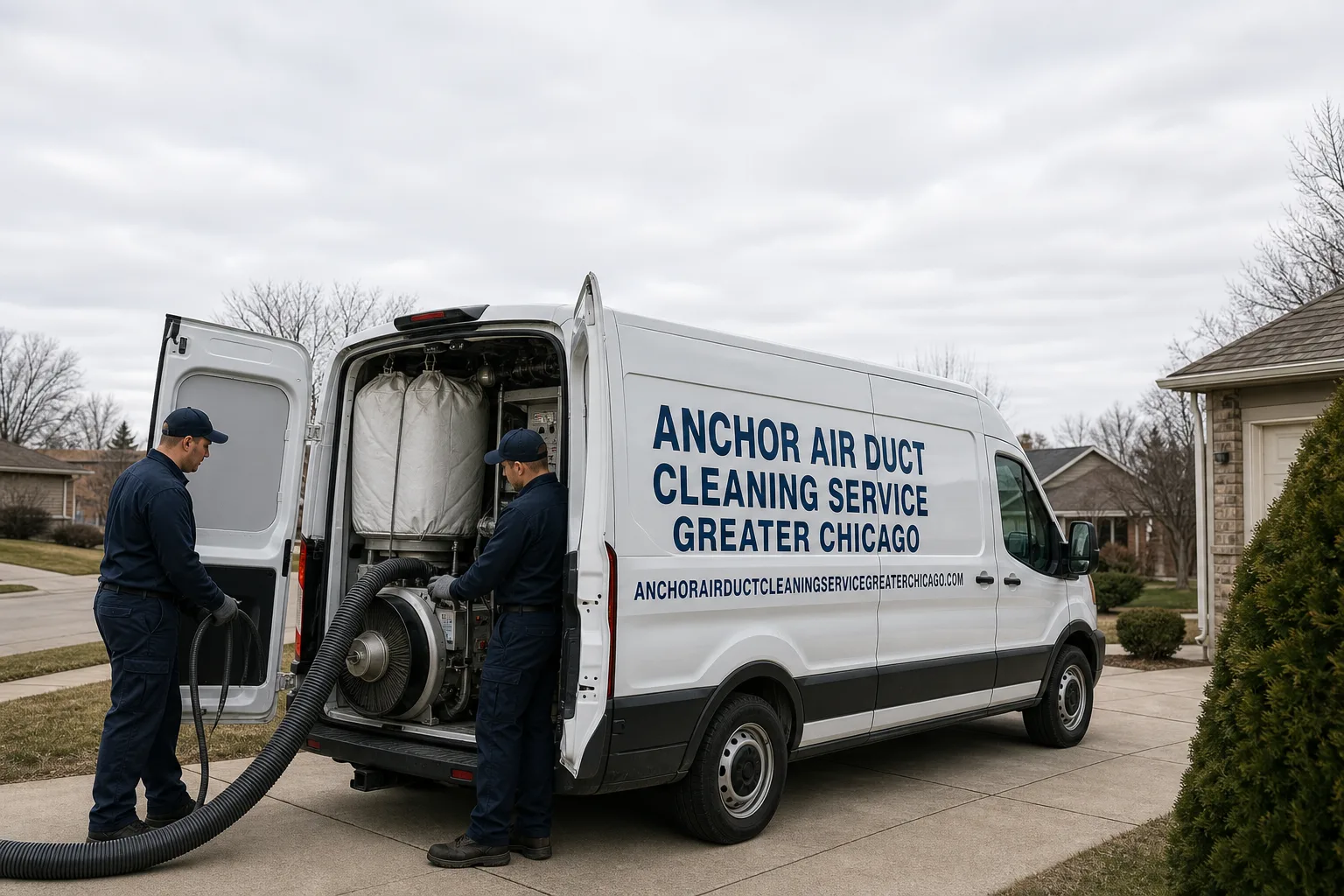
Ronald Cooper has been running Anchor Air Duct Cleaning Service Greater Chicago for 11 years, and in that time he’s built a reputation in Village of Campton Hills that 502 verified reviews — averaging 4.9 out of 5 stars — reflect honestly. That number didn’t come from volume discounting. It came from showing up with professional-grade Rotobrush and Nikro equipment, doing the work personally, and being straight with homeowners about what their systems actually need.
Ronald Cooper leads every service call as lead technician — not a subcontractor, not a trainee running a van. For Village of Campton Hills homeowners who’ve been burned before by low-bid crews who showed up with a shop vac and called it “duct cleaning,” that accountability is the difference. We know the housing stock in this area: the multi-zone estate homes, the older farmstead structures, the long duct runs that accumulate debris faster than anything you’d find in a denser suburb. That local knowledge shapes how we quote, how we set equipment, and how we treat your home.
Our Air Quality & Sanitizing Services in Village of Campton Hills
Mold Treatment
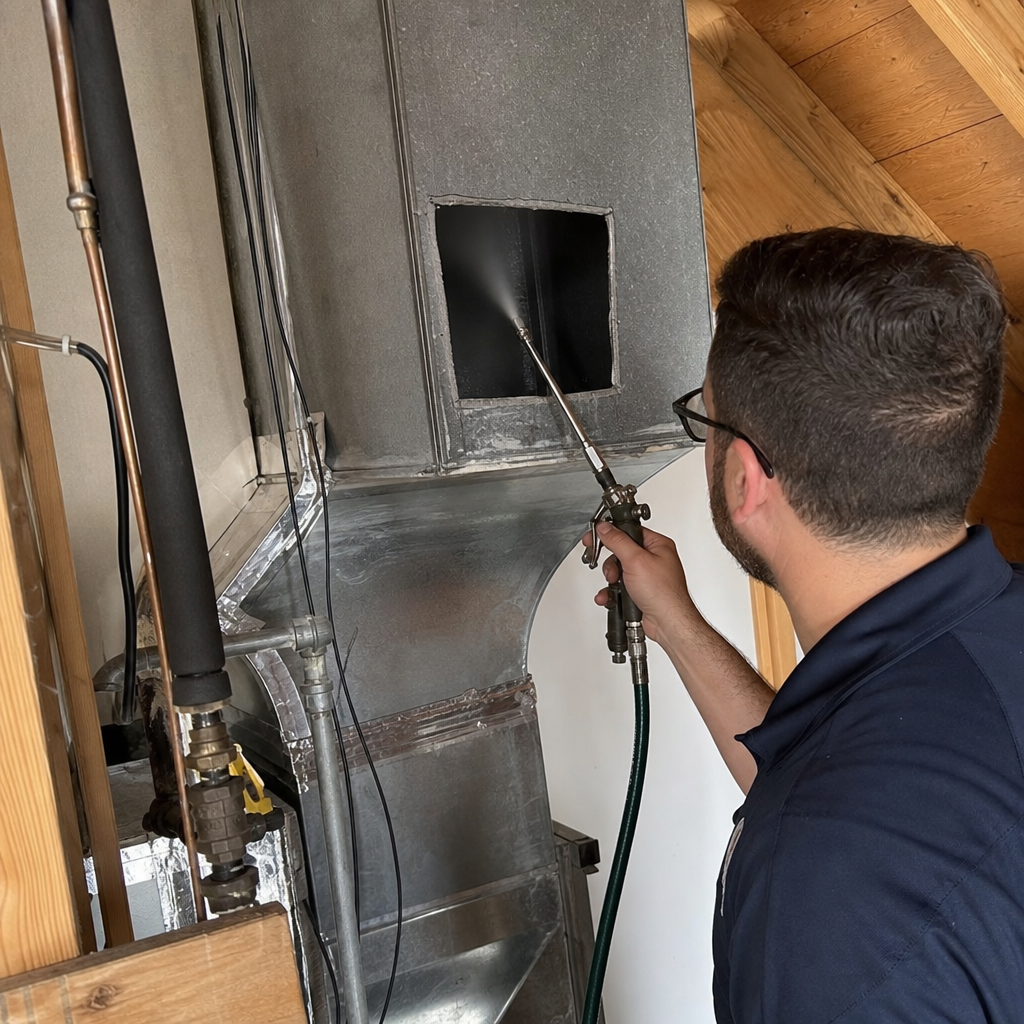
Village of Campton Hills sits in low-lying terrain near the Fox River watershed, and that geography creates localized moisture pockets that are genuinely different from what you’d encounter in St. Charles or Geneva just a few miles east. Mold colonies establish quickly in those conditions — particularly in the lower sections of return-air ductwork on properties served by well water, where poor pressure-tank management can quietly elevate indoor humidity for months before anyone notices. We don’t perform surface-only mold sanitizing in Campton Hills homes. We use Abatement Technologies-approved antimicrobial treatments with dwell times calibrated for the elevated bioload we consistently find here, and we assess the moisture pathway that allowed the colony to establish — because treating the symptom without addressing the source means the mold comes back.
Bacteria Sanitizing
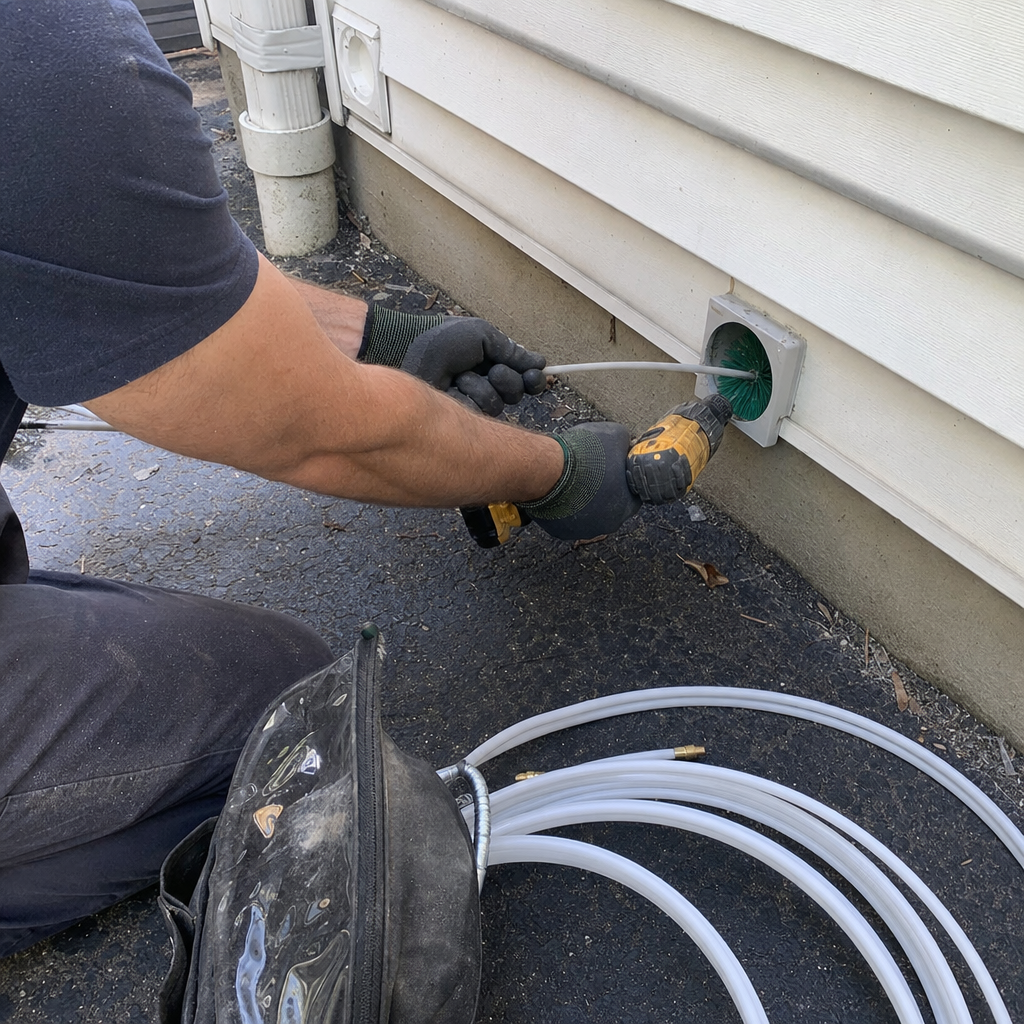
The agricultural environment surrounding Village of Campton Hills introduces bacterial loads into HVAC systems that most sanitizing protocols simply aren’t calibrated for. On horse-farm and hobby-farm properties along the rural-residential parcels in the 60175 zone, we regularly extract return-air debris that includes fine paddock soil, animal dander, and organic material that creates a breeding environment for bacteria far more aggressively than a standard suburban home would. Our bacteria sanitizing treatments use EPA-registered antimicrobial agents applied at concentrations appropriate to the actual contamination level we measure — not a one-size dose written for a townhouse in Elburn.
Odor Removal
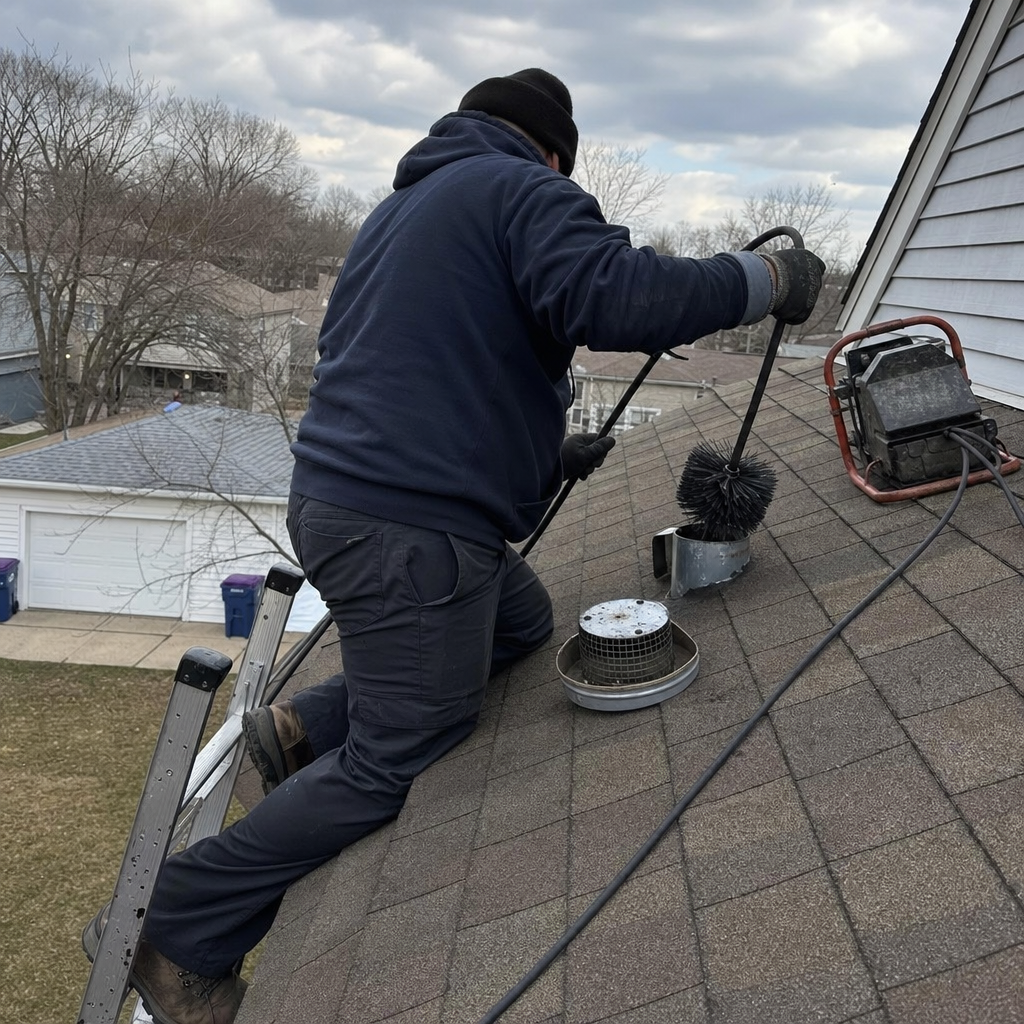
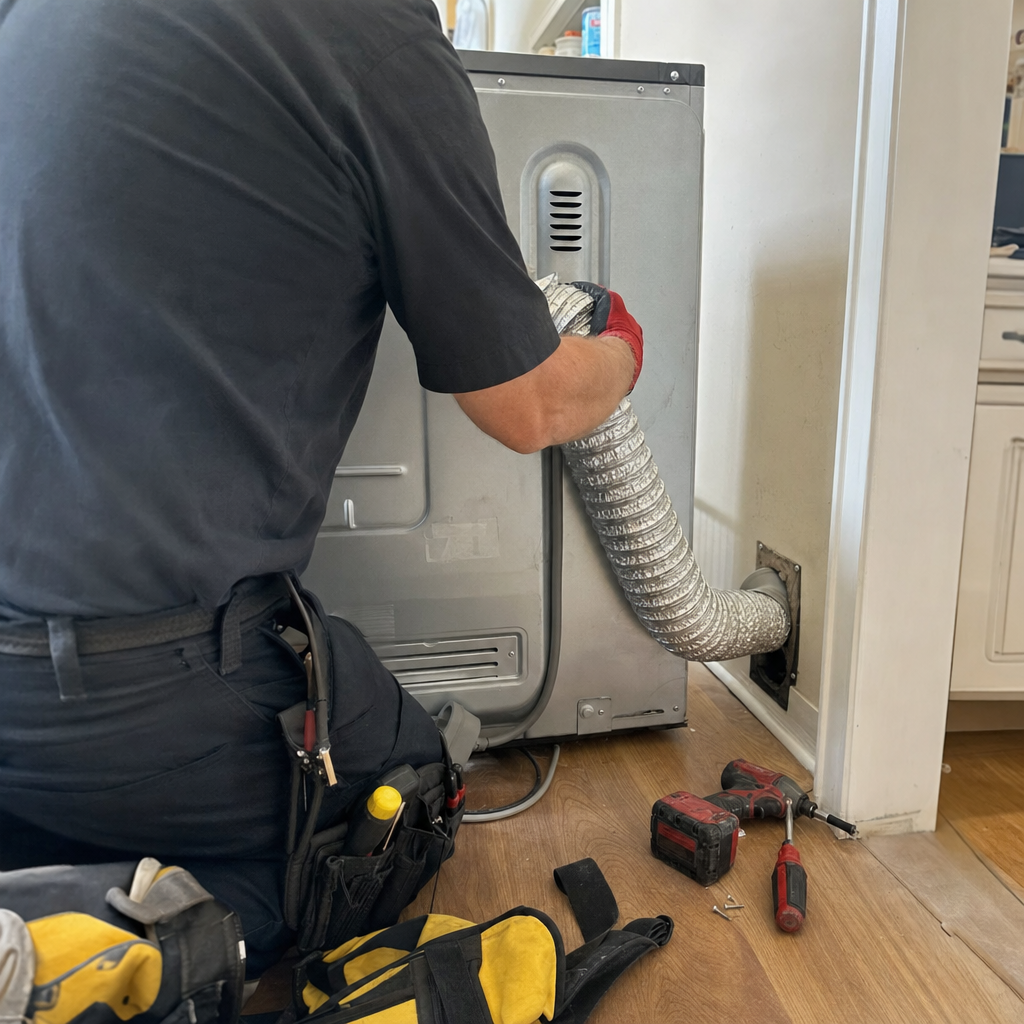
Persistent odors in Village of Campton Hills homes frequently trace back to ductwork rather than surfaces — compacted hay dust, mold, animal dander, and field particulate embedded in return-air trunks will emit a musty or earthy smell every time the system cycles, no matter how many times you clean the floors. We locate the odor source within the duct system before we treat anything, because masking an embedded contamination with a fragrance-based product is a short-term fix that doesn’t address what’s actually in the air. For homes near the farmland parcels west of the subdivision edge, odor removal almost always involves both mechanical extraction and antimicrobial treatment of duct interiors.
UV Light Installation
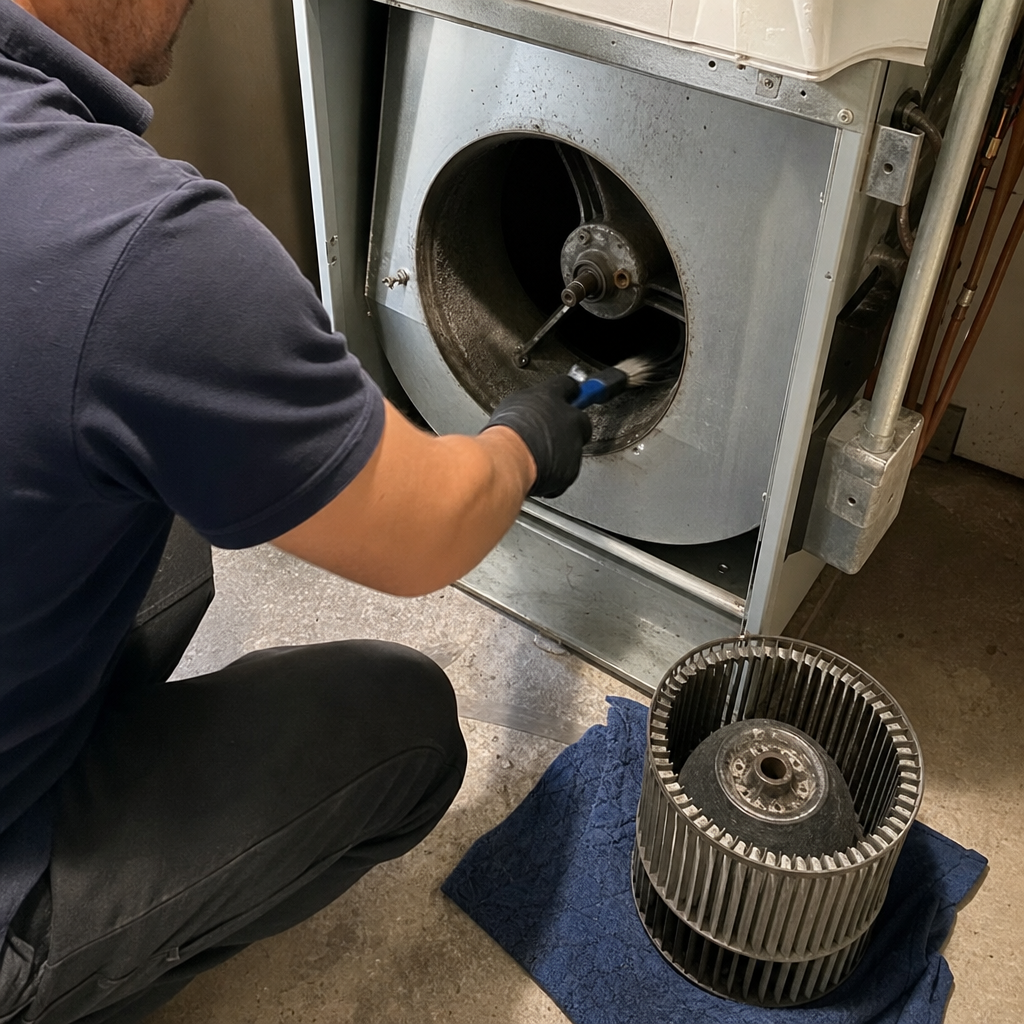
UV germicidal light systems installed at the coil or in the air handler are one of the most effective ongoing defenses against mold re-establishment in Village of Campton Hills homes, particularly on properties where humidity control is difficult due to well-water systems or the area’s localized moisture conditions. We install and calibrate UV systems appropriate to the HVAC configuration — including multi-zone systems common in the larger estate homes throughout Village of Campton Hills — so the germicidal coverage actually reaches what it needs to reach rather than being undersized for the airflow volume. Honeywell UV systems are among the options we carry and install regularly on these larger multi-zone setups.
What happens when you call
- 1
A real person answersNo phone trees — you reach a local pro.
- 2
You get an upfront price rangeHonest numbers before anyone is dispatched.
- 3
A background-checked tech heads outLicensed & insured, dispatched right away.
- 4
You approve before work beginsNothing starts until you say go.
The Campton Hills Contamination Profile — Why Standard Protocols Fall Short
This is the paragraph that no generic air quality page will ever include, because it only applies here. Campton Hills horse-farm and hobby-farm properties introduce a contamination profile — hay dust, animal dander, and fine paddock soil embedded deep in return-air ducts — that is closer in character to rural downstate Illinois than to any neighboring suburb. Standard sanitizing protocols designed for St. Charles or Geneva homes are calibrated for pollen, household dust, and pet dander. They routinely underestimate the bioload present in a Campton Hills return-air trunk that sits thirty feet from a paddock.
It gets more complicated because Village of Campton Hills remained largely unincorporated Kane County until 2007. Many of these large-lot homes were built across the 1980s through early 2000s under inconsistent code oversight, which left a wide range of duct configurations — some well-sealed multi-zone systems, some gravity-duct remnants in older farmstead structures, some flex-duct installations that can’t tolerate the same equipment pressure settings you’d use in a newer home. We dial our Rotobrush agitation equipment back on those fragile older systems specifically because collapsing a thin-gauge duct wall doesn’t clean anything — it spreads contaminated debris and voids the sanitizing effort entirely.
Our crew responded to a property on the rural-residential parcels along the 60175 corridor west of the subdivision edge where the homeowner had been dealing with persistent musty odors and elevated allergy symptoms through spring planting season. Using Rotobrush equipment set conservatively to protect older flex-duct sections, we extracted compacted layers of hay dust, fine paddock soil, and fungal debris from the return-air trunk — then applied an Abatement Technologies-approved antimicrobial treatment across the interior duct surfaces. We followed with an Aprilaire whole-home air purifier installation on the multi-zone system. Within two weeks, the homeowner confirmed that odor levels had dropped noticeably, even with barn ventilation running nearby. That’s the kind of result that doesn’t happen when someone applies a standard suburban sanitizing dose and moves on.
Allergen Reduction in Village of Campton Hills
Spring field work on the Kane County agricultural land surrounding Village of Campton Hills saturates outdoor air for weeks at a stretch. Crop particulates, field dust, and agricultural pollen enter HVAC outdoor air intakes at concentrations that dwarf what a home in a denser suburb ever sees — and once that particulate loads into ductwork, it doesn’t leave on its own. Allergen reduction in Village of Campton Hills isn’t just about filtration. It requires mechanical extraction of embedded debris, duct surface treatment, and in most cases an upgrade to a whole-home air purification system sized for the actual square footage and HVAC zone count of the property.
For the larger estate homes in Village of Campton Hills — many exceeding 3,000 square feet with multi-zone systems and long duct runs — an undersized single-room purifier does very little. We install Aprilaire whole-home systems integrated directly into the HVAC air handler so that every zone in the house benefits. On properties with documented horse or livestock activity, we typically recommend combining air purifier installation with an initial deep sanitizing treatment to reset the baseline contamination level before the purifier takes over ongoing maintenance.
Trusted Brands We Service in Village of Campton Hills
We carry and install Honeywell and Aprilaire air quality and purification systems regularly on Village of Campton Hills properties — both brands perform well in the multi-zone HVAC configurations common to the larger estate homes in this area. For antimicrobial and sanitizing treatments, we work with Abatement Technologies-approved products that meet the concentration requirements for agricultural-exposure properties. We stock components locally for fast turnaround, which matters when a homeowner in Village of Campton Hills is mid-allergy-season and waiting on a part that’s been backordered somewhere.
Common Air Quality & Sanitizing Problems We See in Village of Campton Hills Homes
- Agricultural particulate loading in return-air ducts: Spring planting and fall harvest on surrounding Kane County fields drives elevated crop dust and pollen into outdoor air intakes for weeks at a time. Homes along the western edge of Village of Campton Hills see this most severely — return-air trunks on some properties accumulate months’ worth of particulate in a single planting season.
- Mold re-establishment after surface-only treatment: The Fox River watershed’s low-lying terrain creates moisture pockets in Campton Hills ductwork that allow mold to return quickly if only the visible surface is treated. Addressing the moisture source — particularly on well-water properties with humidity management issues — is a required step, not optional.
- Hay dust and animal dander in farmstead ductwork: Horse-farm and hobby-farm properties throughout the 60175 area regularly present with return-air contamination profiles that include hay dust, fine soil, and animal dander compacted into duct sections closest to the outdoor intake. Standard suburban cleaning cycles don’t extract this material effectively without extended dwell treatment.
- Fragile duct infrastructure in pre-2007 construction: Because Village of Campton Hills was unincorporated Kane County through most of its residential development, code enforcement was inconsistent. Older flex-duct and early gravity-duct installations in farmstead structures are more fragile than modern systems and require equipment calibration that prevents duct wall collapse — a risk that’s underappreciated by crews unfamiliar with this housing stock.
Pricing for Air Quality & Sanitizing in Village of Campton Hills, IL
A typical mold treatment in Village of Campton Hills runs $250–$450, depending on the extent of colonization and the number of duct zones that require treatment. Bacteria sanitizing for a standard single-zone home starts around $175–$300; for multi-zone estate homes with longer duct runs — common throughout Village of Campton Hills — expect $350–$600 depending on access complexity. UV light installation runs $300–$600 installed based on system type and HVAC configuration. Aprilaire or Honeywell whole-home air purifier installation typically falls in the $500–$900 range for multi-zone systems. Odor removal treatments are usually quoted after inspection, but most Village of Campton Hills jobs run $200–$400. Call (833) 223-3823 — estimates are free, and Ronald Cooper will give you a straight number before any work starts.
We Also Serve Cities Near Village of Campton Hills
Anchor Air Duct Cleaning Service Greater Chicago serves homeowners throughout the surrounding area, including Wasco, Saint Charles, Elburn, and South Elgin. If you’re in any of these communities and dealing with air quality or sanitizing concerns, we’re already in your area regularly — call (833) 223-3823 and we’ll get you scheduled promptly.
Serving Village of Campton Hills, IL — Our Local Coverage Area
We’re based in the Village of Campton Hills area and know this community well. Use the map below to see our service coverage — if you’re nearby, we can almost certainly help.
FAQs — Air Quality & Sanitizing in Village of Campton Hills
Horse-farm and hobby-farm properties in Village of Campton Hills introduce hay dust, animal dander, and fine paddock soil into return-air ductwork at concentrations that standard suburban protocols aren’t designed to address — those protocols are calibrated for household dust and pollen, not an active agricultural environment thirty feet from a barn. The antimicrobial treatment concentrations and dwell times we apply in Campton Hills are heavier than what we’d use in St. Charles, because the bioload present is genuinely different. If you’re on a farm or hobby-acreage property in the 60175 area, call us at (833) 223-3823 — we’ll assess what your system is actually carrying before we quote anything.
The Fox River watershed’s low-lying terrain creates localized moisture pockets throughout Village of Campton Hills that keep ductwork interiors more humid than they would be in a denser suburb — and on well-water properties where pressure-tank management is imperfect, indoor humidity can quietly stay elevated for months, giving mold a continuous growth environment. Surface-only mold sanitizing doesn’t solve this; the colony re-establishes because the moisture condition that allowed it to form hasn’t been addressed. We identify the moisture pathway as part of our assessment so the treatment actually holds. Call (833) 223-3823 for a free look at what your system is showing.
Yes, directly. Homes built in Village of Campton Hills during the 1980s through early 2000s under unincorporated Kane County oversight can have duct configurations that vary significantly from what you’d find in a code-consistent suburb — some have flex-duct sections that can’t tolerate standard high-powered extraction without collapsing, others have early forced-air or gravity systems that require completely different access strategies. We inspect the duct configuration before we calibrate any equipment, which is the step that separates a clean job from one that spreads debris rather than removing it.
In Village of Campton Hills, yes — more than most homeowners expect. Spring planting on the agricultural fields that directly abut the village’s residential parcels kicks fine crop dust, soil particulate, and agricultural pollen into outdoor air at concentrations that saturate HVAC air intakes for weeks at a stretch. That particulate loads into ductwork and accumulates across multiple seasons. Homes along the western edge of the village, where residential subdivisions sit directly adjacent to active Kane County farmland, see the most significant accumulation. If your HVAC pulls outdoor air near a field perimeter, a post-planting sanitizing inspection is worth scheduling. Call (833) 223-3823 to set it up.
For multi-zone systems in the larger estate homes throughout Village of Campton Hills — many running 3,000 square feet or more with separate zone controls — a whole-home air purifier integrated at the air handler outperforms any single-zone or portable unit because it treats the air in every zone as the system cycles. Aprilaire whole-home systems are well-matched to this configuration and are among what we install regularly on Campton Hills properties. UV germicidal lights installed at the coil add ongoing mold suppression, which is especially relevant given the moisture conditions near the Fox River watershed. Ronald Cooper can walk you through the right sizing for your specific system — call (833) 223-3823 for a free assessment.
Written by Ronald Cooper, Owner at Anchor Air Duct Cleaning Service Greater Chicago, serving Village of Campton Hills since 2014.